2026
Yukiyasu Kamitani will give a keynote talk “Generative Brain Decoding: Reconstructing the Landscape of Subjective Experience” at the 2026 IEEE International Conference on Development and Learning (ICDL) in Kyoto (September 15–18, 2026).
Date: Tuesday, March 3, 2026
Time: 2:30–5:30 pm (JST)
Venue: Frontier Science Building (先端科学研究棟) Room 103, Kyoto University
Google Maps | Campus Map
Overview
How does the brain transform acoustic signals into rich perceptual experiences—recognizing everyday sounds, reconstructing auditory scenes, and deriving pleasure from music? Recent advances in deep neural networks and brain decoding are beginning to answer these questions by revealing the computational principles shared between artificial and biological auditory systems.
This minisymposium brings together three complementary perspectives at the intersection of auditory neuroscience and AI: the neural and perceptual representation of natural sounds explored through CNN-based modeling and ultra-high-field fMRI; the generative reconstruction of diverse auditory experiences—including subjective attentional states—from brain activity; and computational approaches to understanding how musical expectations give rise to pleasure. Together, these talks illustrate how integrating neural measurements with modern computational models can illuminate the mechanisms underlying our everyday auditory experience.
Program
| Speaker | Title |
|---|---|
| Bruno L. Giordano (CNRS & Aix Marseille Université, INT) | The Perceptual and Cerebral Representation of Natural Sounds |
| Jong-Yun Park (Science Tokyo) | Reconstructing Auditory Experience from Human Brain Activity |
| Vincent Cheung 張家銘 (Sony CSL) | Computational approaches towards understanding why people enjoy music |
Speakers & Abstracts
Bruno L. Giordano (CNRS & Aix Marseille Université, INT)
Title: The Perceptual and Cerebral Representation of Natural Sounds
Abstract: Every day, we encounter diverse natural sounds (chirps, impulses) and effortlessly recognize the objects and events producing them (a bird call, a nail being hammered). Studying how we perceive these sounds provides a unique window into how the auditory system operates under real-world conditions, moving beyond the traditional focus on speech and music. Investigating these signals promises a broader understanding of auditory processing, encompassing both acoustic complexity and semantic structure. I will start this talk by describing my early behavioural and fMRI work attempting to tease apart acoustic and semantic components of natural sound representation. I will then focus on more recent collaborative efforts that combined behavioral measures, ultra-high-field (7T) fMRI, and convolutional neural networks (CNNs) to reveal that CNN-based models closely mirror perceptual and fMRI representations. Here, mid-layer CNN representations best predicted brain and behavioral data, likely emphasizing the acoustic structure critical for identifying objects and actions (hyperacoustics). I will then describe ongoing work that aims to track the temporal unfolding of natural sounds representations through magnetoencephalography. I will conclude the talk with an overview of a new collaborative effort that aims to extend our AI + computationally modelling framework from isolated sounds to the complexity of real-life auditory scenes. By embracing the full richness of everyday listening, we seek a unified perspective on how the auditory system decodes our ever-changing acoustic environment, ultimately integrating neural, behavioral, and computational insights to illuminate the complexity of real-world hearing.
Jong-Yun Park (Science Tokyo)
Title: Reconstructing Auditory Experience from Human Brain Activity
Abstract: Recent advances in brain decoding have demonstrated that complex perceptual experiences can be externally reconstructed from human brain activity. In this talk, I will present a series of studies aimed at reconstructing diverse auditory experiences from fMRI by decoding hierarchical auditory representations that closely parallel those learned by deep neural networks. By integrating these decoded features with an audio-generative model, we show that arbitrary real-world sounds can be reconstructed while preserving key spectral structures and short-timescale temporal information. Behavioral and objective evaluations further indicate that the reconstructed sounds not only resemble the original stimuli but also reflect subjective perceptual states such as selective attention. In addition, I will introduce cross-modal experiments demonstrating that visual stimuli can evoke high-level auditory representations, suggesting top-down modulation from visual to auditory cortex. I will conclude by discussing future directions, including applications to auditory imagery and hallucination, as well as the implications of cross-modal interactions for understanding multisensory auditory experiences.
Vincent Cheung 張家銘 (Sony CSL)
Title: Computational approaches towards understanding why people enjoy music
Abstract: Music is one of life’s greatest pleasures. One way through which music is thought to elicit pleasure is by the confirmation and deviation of listeners’ expectations. In the first part of my talk, I show how we can apply computational models to quantify musical expectations and investigate the neural and cognitive mechanisms underlying our enjoyment of music. In the second part, I introduce more general computational methods we developed in multimodal alignment and multivariate decoding to bridge the epistemic gap between cognition and neural activity.
“Readout Representation: Redefining Neural Codes by Input Recovery” by Shunsuke Onoo, Yoshihiro Nagano, and Yukiyasu Kamitani has been accepted at ICLR 2026. [OpenReview] [arXiv]
2025
ATRオープンハウス2025 https://atr.jp/expo/?nl=81
◆2025年10月2日(木)・3日(金)10:00~17:00
◆場所:ATR(京都府相楽郡精華町光台2-2-2)
◆内容:展示約60件、講演5件(ライブ配信あり)
神谷も講演します
Brain-to-AI and Brain-to-Brain Functional Alignments
Presentation at a meeting of JSPS Transformative Research Area (A) “Unified theory of prediction and action” at Kyoto University (2024.11.7)
2024
The thin line between reconstruction, classification, and hallucination in brain decoding
SFB workshop “Categorization in Perception and Action: Minds, Models, Mechanisms”
June 30th to July 2nd
Rauischholzhausen castle, Germany
2023
Reconstructing visual illusory experiences from human brain activity
Chen et al.. Science Advances, 2023
BMI 研究はなぜ同じ失敗を繰り返すのか(日本BMI研究会, 2021.11.5)
日本BMI研究会(2021.11.5)
(明日へのLesson)第4週:キャンパス 脳活動をAIで解析、心を「見える」化 神谷之康さん:朝日新聞デジタル
(明日へのLesson)第4週:キャンパス 脳活動をAIで解析、心を「見える」化 神谷之康さん 朝日新聞 2023年9月28日
脳とAIは似ているか ― NeuroAI の挑戦 日本心理学会シンポジウム(2023.9.17) 「深層学習と心理学 その可能性を探る」
International Conference on the Ethics of Neurotechnology
International Conference on the Ethics of Neurotechnology UNESCO will organize an International Conference on the Ethics of Neurotechnology on the theme “Building a framework to protect and promote human rights and fundamental freedoms” at UNESCO Headquarters in Paris, on 13 July 2023, from 9:00 in Room I.
Sound reconstruction from human brain activity (Park et al., 2023)
Park et al. (2023) Supplementary movies
Reconstructing visual illusory experiences from human brain activity
Cheng et al. (2023) Reconstructing visual illusory experiences from human brain activity
31. The Feelings Lab - Emotions and the brain w/ Dr. Yukiyasu Kamitani
Spotify Podcast, 2023.4.12
脳と心の科学の「ミッドライフクライシス」 金子書房 #note
脳と心の科学の「ミッドライフクライシス」(京都大学情報学研究科 教授、ATR脳情報研究所 客員室長:神谷之康) #その心理学ホント?|「こころ」のための専門メディア 金子書房 @kanekoshobo #note
2022
ブレインデコーディング開発者が考える脳科学の今とこれから | 神谷之康 (NeurotechJP インタビュー, 2022.12.20)
NeurotechJP インタビュー
2022年度 京都大学 情報学研究科 知能情報学専攻 シンポジウムのお知らせ |
開催情報 日時: 2022年12月9日(金) 16:00-18:00 対象: 知能情報学専攻に興味のある学生・企業、どなたでも参加可 会場: 京都大学総合研究8号館 3階 NSホール 参加費: 無料 申込先: こちらから事前登録下さい
September 7, 2022 – September 8
DZNE Campus, Bonn, Germany
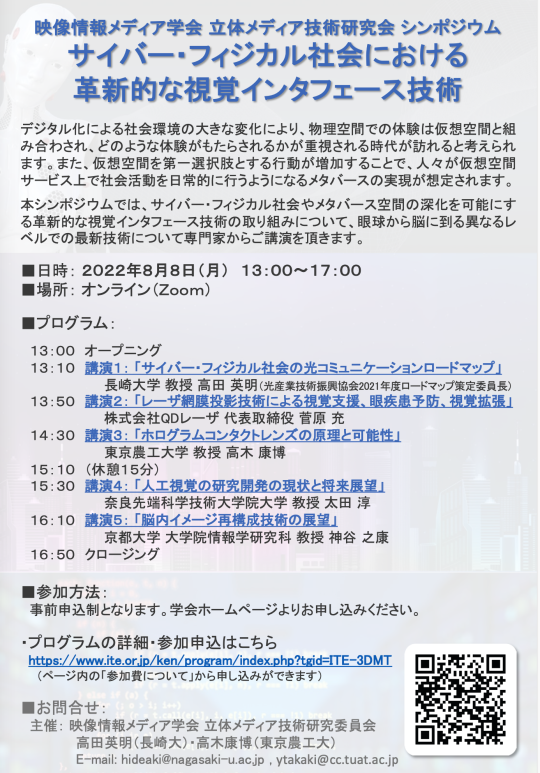
映像情報メディア学会立体メディア技術研究会シンポジウム 「サイバー・フィジカル社会における革新的な視覚インタフェース技術」
■日時: 2022年8月8日(月) 13:00〜17:00 ■場所: オンライン(Zoom)
■プログラム: 13:00 オープニング 13:10 講演1: 「サイバー・フィジカル社会の光コミュニケーションロードマップ」 長崎大学 教授 高田英明 (光産業技術振興協会2021年度ロードマップ策定委員長) 13:50 講演2: 「レーザ網膜投影技術による視覚支援、眼疾患予防、視覚拡張」 株式会社QDレーザ 代表取締役 菅原充 14:30 講演3: 「ホログラムコンタクトレンズの原理と可能性」 東京農工大学 教授 高木康博 15:10 (休憩15分) 15:30 講演4: 「人工視覚の研究開発の現状と将来展望」 奈良先端科学技術大学院大学 教授 太田淳 16:10 講演5: 「脳内イメージ再構成技術の展望」 京都大学大学院 情報学研究科 教授 神谷之康 16:50 クロージング
■参加方法: 事前申込制となります。学会ホームページよりお申し込みください。 ・プログラムの詳細・参加申込はこちら https://www.ite.or.jp/ken/program/index.php?tgid=ITE-3DMT (ページ内の「参加費について」から申し込みができます)
■お問合せ: 主催: 映像情報メディア学会立体メディア技術研究委員会 高田英明(長崎大)・高木康博(東京農工大) E-mail: hideaki@nagasaki-u.ac.jp , ytakaki@cc.tuat.ac.jp
入試説明会について | 京都大学 大学院情報学研究科 知能情報学専攻 | 2022.5.14
入試説明会について
今年度の入試説明会を下記のとおり開催いたします。参加希望者は下記のフォームから事前登録をお願いします。
開催日時:2022/5/14(土)13:00~18:00
(全体説明13:00~15:00、個別説明15:00~18:00)
場所 :工学部電気総合館1階 大講義室
:オンライン同時開催あり(URLは参加登録者に後日通知します)
事前登録の締切日:2022年5月11日(水)
脳科学若手の会 第14回春の研究会| ワークショップ : 実験データ解析再入門―論文を「フェイクニュース」にしないために (神谷之康)
「実験データ解析再入門: 論文を『フェイクニュース』にしないために」というワークショップをやります
2021
本専攻では、人間らしいしなやかな人工知能の実現と人間知能の情報処理機構の 解明を目指し、幅広く研究を展開しています。 我々の行っている最先端の研究を知っていただき、より良い未来社会の共創に向けた、 分野および産学を超えた連携を深める機会として本シンポジウムを開催します。 学生や教員と直接気軽に話せるまたとない機会ですので、本専攻への入学、 本専攻研究室との共同研究、「人を知る」人工知能講座受講を検討されている方など、 幅広い参加をお待ちしています。
日時:2021 年 12 月 10 日 ( 金 )14:00-17:00
対象:知能情報学専攻に興味のある学生・企業、どなたでも参加可 会場:オンライン ※お申込みいただいた方には後日参加方法をお送りします。
参加費:無料
申込先:https://qr.paps.jp/PrEtW ※本シンポジウムは申込が一定の人数に達したら締め切りとさせて頂きます。
14:00-14:05 開会のあいさつ ( 情報学研究科長 河原達也 ) 14:05-14:15 知能情報学専攻およびシンポジウムのご紹介 14:15-15:00 学生によるライトニングトーク 15:00-17:00 ポスターセッション + 相談会
問い合わせ:yoshimura@vision.ist.i.kyoto-u.ac.jp( 知能情報学専攻 西野研究室 吉村 )
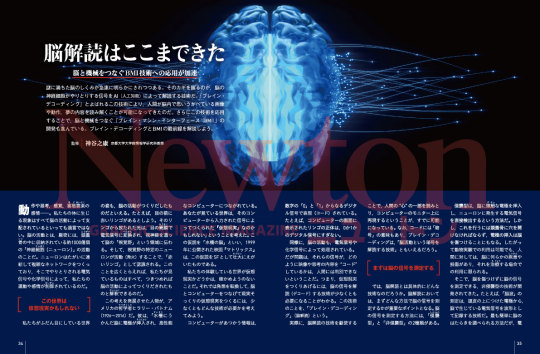
fMRIで心は読めるか?|脳・神経|学会レポート|医療ニュース|Medical Tribune
第43回日本生物学的精神医学会・第51回日本神経精神薬理学会合同年会での講演| MedicalTribune, 2021.8.27
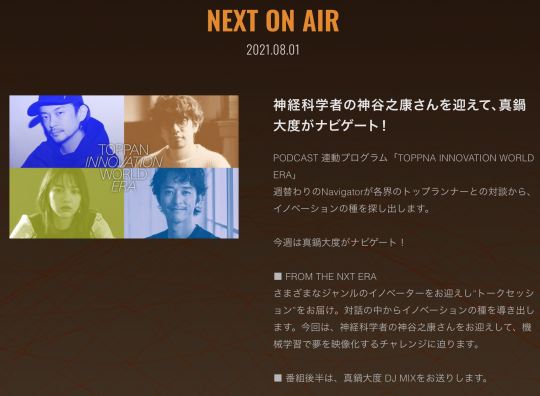
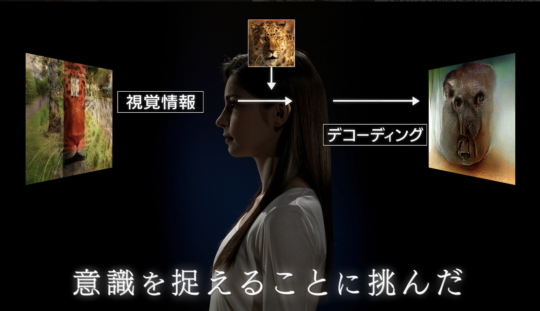
2021.9.8~
脳科学とAIはいかに社会を変えるか
塾 長 : 東京大学 大学院総合文化研究科 教授 酒井 邦嘉
社会変化の予測から仕事の意義(シンギュラリティの問題)まで、人間の脳をモデルとした人工知能(AI)が応用されようとしている。そこで、知性(インテリジェンス)や個人の資質の多様性を脳のメカニズムとして科学的に理解し、脳の潜在的能力を創造性に活かすことが問われている。 本講座では、「脳とAI」に関する先端的な取り組みを紹介しながら、特に予備知識を仮定することなく理解できるよう、本学内外からの卓越した講師陣がわかりやすく解説する。人間を対象とした脳科学の「概論」に続き、学習や適応を支援する技術開発、食と香りの脳計測、AIで脳から心を解読する「産業応用」を扱う。また、精神医学と脳科学、計算論的精神医学といった「医療応用」、そしてAIによる自然言語処理、志向性とロボティクスといった「技術開発」を知り、百年後のテクノロジーと脳、脳科学の倫理と人間から「未来論」を含めて、俯瞰的かつ深い理解をめざす。 本塾では、多用な可能性を持つ脳科学をテーマに、多方面からの講義とディスカッションを通して、AIの利用がいかに社会を変えるかを探りたい。
Feindel Virtual Brain and Mind Lecture, 2021.3.10
2020
2019
https://www.kyoto-u.ac.jp/ja/access/campus/yoshida/map6r_i.html
日時: 2020 年 1 月 7 日 (火) 12:15-13:30 場所: 京都大学吉田キャンパス医学部構内先端科学研究棟 5 階 501 号室 https://www.kyoto-u.ac.jp/ja/access/campus/yoshida/map6r_i.html 参加費や事前登録は不要です. セミナー中に軽食 (サンドイッチ) を提供します.飲み物はお持ちください.
Date: 2020-01-07 Tue 12:15-13:30 Place: Rm. 501, Science Frontier Laboratory, Kyoto University Faculty of Medicine Campus https://www.kyoto-u.ac.jp/en/access/medicine-campus-map.html The talk is in English. Free, no registration required. We will provide sandwiches for lunch.
The transfer and transformation of cognitive information in functional brain networks
Takuya Ito (Rutgers University)
Abstract:
The brain processes information in a distributed manner to perform cognitive functions. Previous work investigating cognitive processing in the brain has typically focused on mapping localized cognitive functions to specific brain regions. In this talk, I will provide empirical evidence for the transfer and transformation of cognitive information between functional brain areas and networks using task fMRI data collected in humans. First, I will show how cognitive representations (identified by decoding neural activation patterns) are transferred to other brain regions using empirically estimated inter-region mappings. Second, I will demonstrate how distinct cognitive representations in distinct spatial locations integrate to generate qualitatively new information (information transformation), such as stimulus to motor response transformations from sensory to motor cortices. This would provide an empirically validated computational mapping to describe how information is manipulated and transformed across brain areas using task fMRI. These two previous approaches required the estimation of ‘functional connectivity’ weights between pairs of regions. In the last part of this talk, I will explore the mechanistic basis of these functional connectivity weights. I will provide converging results of correlation-based approaches to fMRI-based functional connectivity and electrophysiology-based noise correlation estimation (from multi-unit recordings from non-human primates), and then provide a dynamical systems framework to ground these results. Together, these results offer an integrative perspective of the transfer and transformation of cognitive information across large-scale functional brain networks.
References: Ito, Takuya, Luke Hearne, Ravi Mill, Carrisa Cocuzza, and Michael W. Cole. “Discovering the Computational Relevance of Brain Network Organization.” Trends in Cognitive Sciences, November 11, 2019. https://doi.org/10.1016/j.tics.2019.10.005.Ito, Takuya, Kaustubh R. Kulkarni, Douglas H. Schultz, Ravi D. Mill, Richard H. Chen, Levi I. Solomyak, and Michael W. Cole. “Cognitive Task Information Is Transferred between Brain Regions via Resting-State Network Topology.” Nature Communications, January 2017. https://doi.org/10.1038/s41467-017-01000-w.Ito, Takuya, Scott L. Brincat, Markus Siegel, Ravi D. Mill, Biyu J. He, Earl K. Miller, Horacio G. Rotstein, and Michael W. Cole. “Task-Evoked Activity Quenches Neural Correlations and Variability across Cortical Areas.” BioRxiv, October 24, 2019, 560730. https://doi.org/10.1101/560730.
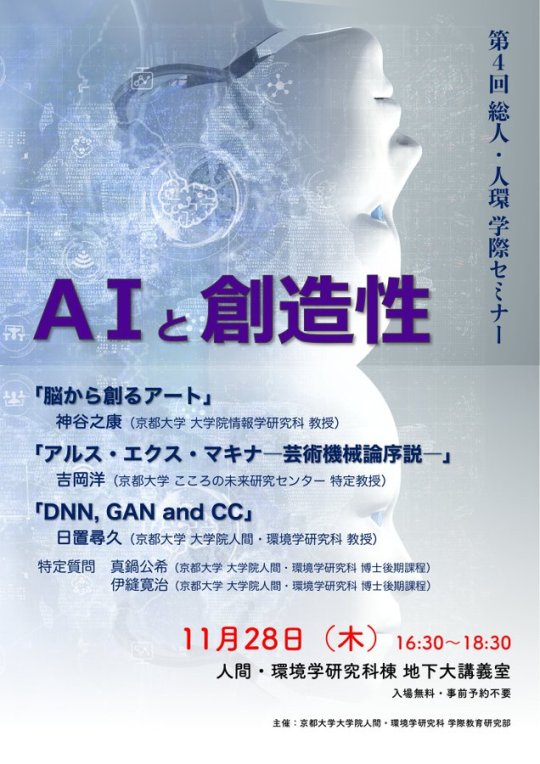
京都大学ELP短期講座「脳と心~脳科学の新潮流~」| 2020.2.19~22
京都大学主催の社会人向け研修プログラム「京都大学エグゼクティブ・リーダーシップ・プログラム(ELP)」が短期集中講座を開催しますのでお知らせします。
テーマは「脳と心~脳科学の新潮流~」です。
https://www.elp.kyoto-u.ac.jp/intensive/
「脳と心はどこまで分かっているのか」 「脳科学は産業へどのように応用できるのか」 「よりよい社会の実現にどう役立てられるのか」
学問と文化の街・京都で、認知科学、心理学、情報科学などの 多方面にわたる専門家から、脳科学の基礎理論から最先端の研究、 ビジネスへの応用まで体系的に学びます。講師には、脳科学、心理学研究の第一人者を迎え、受講生は全国から募集します。
日 程:2020年2月19日(水)~2月22日(土)9:30~19:00 ※19:00以降のプログラムあり 場 所:京都大学楽友会館(京都市左京区吉田二本松町) 定 員:先着30名(定員に達し次第締切、残り13席) 受講料:50万円(税込)テキスト代、 ランチ代、 パーティ代含む。 ※同一企業からの複数参加の場合割引り 申込み:Facebookページの参加ボタンではなく、下記ホームページより必要事項をご入力の上お申し込みください。
https://business.form-mailer.jp/fms/1bc0f354106116
プログラム:4日間全て受講いただくプログラムです。 <1日目:脳の生理学> 『「脳科学」超入門』小川正晃(京都大学准教授) 『機能回復の脳科学』伊佐正(京都大学教授)
<2日目:心とは何か> 『心の来し方行く末』積山薫(京都大学教授) 『ヒトの始まり、 心の始まりを科学する』板倉昭二(同志社大学教授) 『脳科学の産業化に向けて』山川義徳(京都大学教授)
<3日目:脳の認知科学> 『「脳」の窓からみる「こころ」』月浦崇(京都大学教授) 『ブレイン・デコーディング』神谷之康(京都大学教授) 『AIと脳』趙亮(京都大学准教授)・磯部洋明(京都市立芸術大学准教授)
<4日目:脳科学の未来> 『意思決定のシステム 神経科学』小村豊(京都大学教授) 『「次なる時代」とは何か』宮野公樹(京都大学准教授
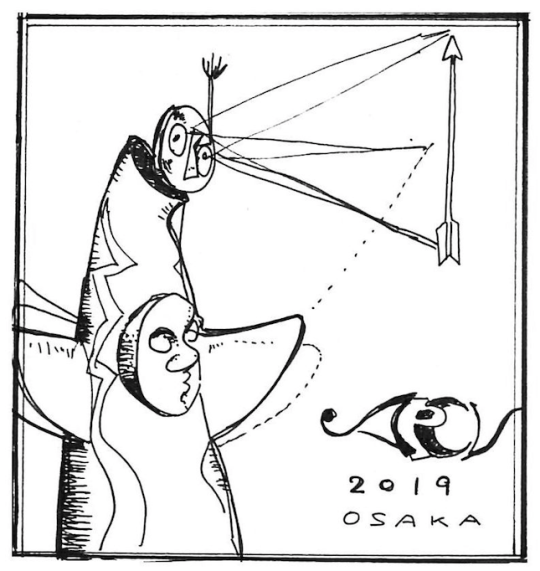
オープンサイエンスのすすめ/Open Science at Kamitani Lab (2019)
オープンサイエンスのすすめ/Open Science at Kamitani Lab (2019)
日本認知心理学会第17回大会ベーシック&フロンティアセミナー 第3部「認知心理学研究のための再現可能性のすゝめープレレジからデータ解析そしてオープンサイエンスまで 」「オープンサイエンスのすゝめ」
Yukiyasi Kamitani + Daito Manabe, Dream Visualization - Sónar+D Barcelona 2019
In July, 2019, Daito Manabe and professor Yukiyasu Kamitani (Kyoto University) will have a talk for Sónar+D.
読心術はうさんくさいと思われがちだ。このエピソードでは、科学的な読心術に焦点を当て、記憶から画像を再現する実験に取り組む研究者や、人が見た夢の内容を読み取るという人類初の試みに挑む日本人科学者を訪ねる。
2018
収録日: 2018/12/10場所: Massa BAR & BISTROメンバーゲスト:神谷先生コメンテーター: 池田さんパーソナリティ: 高橋概要Part 1 (12:16): イントロ(神谷先生紹介)・アートとデコーディングについてPart 2 (11:35): 再現可能性の問題を気にすることになったきっかけPart 3 (21:42): 認知神経科学の再現可能性問題Part 4 (8:08): (基礎系)心理学への思いPart 5 (23:53): オープンデータ・オープンサイエンスの実践とかラボ運営体制とかPart 6 (11:20): 池田さんの質問・神谷先生の感想
Music video for a new song “yume (=dream)” by Maison Book Girl, a Japanese pop group. We provided movie (brain reconstructions of seen images, not dreamed ones; Shen et al. bioRxiv 2017) and sound (MRI noise; Siemens Trio 3T) materials used in this video.
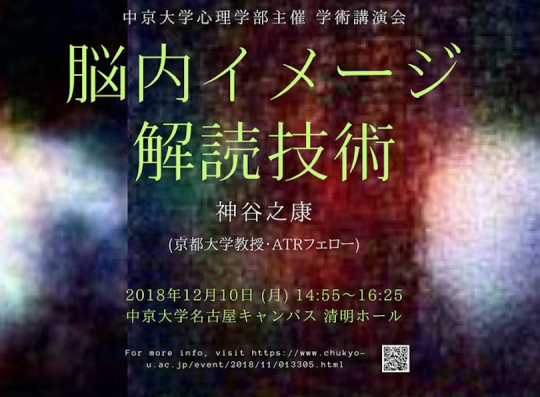
日時:2019年1月25日(金)10:15~17:00 終了後懇親会
会場:京都アカデミアフォーラム in 丸の内 (東京都千代田区丸の内1-5-1 新丸の内ビルディング10階)
主催:京都大学大学院情報学研究科知能情報学専攻・京大オリジナル株式会社
「東京で学ぶ 京大の知」シリーズ29「未来につながる情報化社会 -展望と課題-」| 2018.11.27
【第2回】2018年11月27日(火曜日)
「脳から心を読む技術」 神谷 之康(情報学研究科 教授)
京都大学 大学院情報学研究科 知能情報学専攻のオープンラボ(研究室公開)を開催いたします。
共同研究を考えておられる企業の方、社会人博士入学を考えておられる方など、本専攻にご興味のある皆さまのご参加を歓迎します。
具体的な研究内容をご覧いただくとともに、各研究室の教員や院生と話す良い機会です。是非ご参加ください。参加費は無料です。
● 吉田キャンパスの研究室については、事前登録は不要です。7号館1Fロビー、総合受付までお越し下さい。
Curator Rebecca Lewin discusses Pierre Huyghe’s exhibition UUmwelt.
Known for creating complex immersive ecosystems, Huyghe presents a major new exhibition at the Serpentine. For the exhibition, the Gallery has become a porous and contingent environment, housing different forms of cognition, emerging intelligence, biological reproduction and instinctual behaviours.
真鍋大度 ∽ ライゾマティクスリサーチ Daito Manabe ∽ Rhizomatiks Research | 霧島アートの森 | 2018
【会場】鹿児島県霧島アートの森 アートホール全館
【会期】2018年11月16日(金)〜2019年1月14日(月・祝)
◎ 真鍋大度+神谷之康研究室(京都大)によるfMRI(脳のスキャンデータ)を用いた作品(新作)
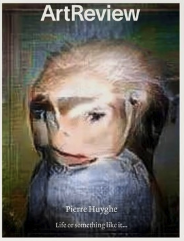
Pierre Huyghe Reads Our Minds, and Discovers a New Art Form | New York Times, 2018
Pierre Huyghe Reads Our Minds, and Discovers a New Art Form | New York Times, 2018
The mind gardener: the machine that turns your thoughts into art | The Guardian, 2018
Pierre Huyghe ’UUmwelt’
Serpentine Gallery, London (3 Oct 2018 – 10 Feb 2019)
Rudimentary Consciousness | Plinth, 2018
Pierre Huyghe ’UUmwelt’
Serpentine Gallery, London (3 Oct 2018 – 10 Feb 2019)
Pierre Huyghe ’UUmwelt’
Serpentine Gallery, London (3 Oct 2018 – 10 Feb 2019)
Pierre Huyghe at the Serpentine — digital canvases and mind-reading machines | Financial Times, 2018
Pierre Huyghe ’UUmwelt’
Serpentine Gallery, London (3 Oct 2018 – 10 Feb 2019)
#uumwelt hashtag on Instagram • Photos and Videos
Pierre Huyghe ’UUmwelt’
Serpentine Gallery, London (3 Oct 2018 – 10 Feb 2019)
Tomoyasu, Horikawa; Aoki, Shuntaro; Tsukamoto, Mitsuaki; Kamitani, Yukiyasu; Lab, Kamitani (2018): Characterization of deep neural network features by decodability from human brain activity. figshare. Fileset.
KamitaniLab/DeepImageReconstruction
Codes and data for deep image reconstruction (Shen et al. bioRxiv 2017) are made available from here.
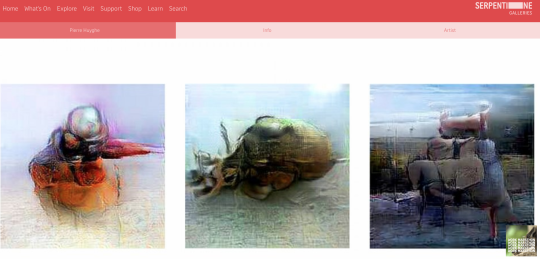
Pierre Huyghe’s exhibition at Serpentine Gallery, London, 3 Oct 2018 to 10 Feb 2019.
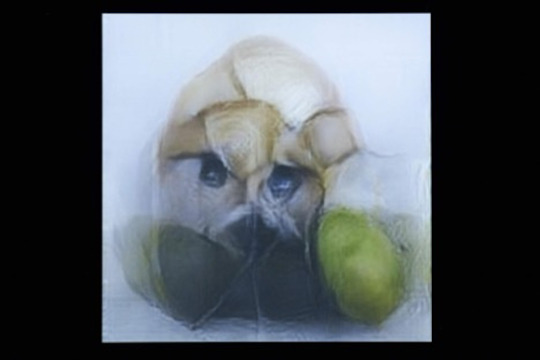
We provided brain-decoded images (deep image reconstruction) for his installation art.
【Entrepreneur Candidate Club (ECC-iCAP) the place where science & entrepreneurship intersect ~ 科学のフロントランナーが語る未来世界 ~】
起業家✖研究者✖技術者が京都大学のサイエンスで起業するプラットフォーム、ECC-iCAPのイベント第三弾を開催します。ご参加お待ちしています。
■日時 5月25日(金) 19:00(18:30開場)~21:30 ■場所 京都アカデミアフォーラム(新丸の内ビル) ■定員 100名 ■対象 起業家精神を持つ社会人、企業経営者、将来、CEO、CSO、CFO等 経営層を目指す個人(京都大学出身者以外も歓迎) ■主催 京都大学イノベーションキャピタル株式会社 ■共催 京都大学産官学連携本部、日本ベンチャーキャピタル株式会社
■プログラム:(司会 京都iCAP 八木信宏)
19:00-19:10 開会挨拶&オリエンテーション(京都iCAP 楠美公/五ノ坪良輔)
19:10-20:50 「科学のフロントランナーが語る未来世界」研究者からのプレゼンテーション アクセラレーターからのご案内
20:30-21:45 交流会(登壇者別にテーブルを囲んで起業家候補と交流)
■研究者プレゼンテーション:研究成果の事業化を目指す京大の研究者等 ・松田文彦 京都大学 医学研究科 附属ゲノム医学センター センター長・教授 テーマ: ヒト生物学から予防医療へ ・藤井啓祐 京都大学 理学研究科 准教授 テーマ: 量子コンピュータの可能性とソフトウェア戦略 ・長船健二 京都大学iPS細胞研究所 教授 テーマ: iPS細胞を用いた腎疾患に対する再生医療の開発に向けて ・神谷之康 京都大学 情報学研究科 教授 テーマ: ブレインデコーディング:脳から心を読む技術
Neuro filter sharpens visual processing
cf., Abdelhack, M. & Kamitani, Y. Sharpening of Hierarchical Visual Feature Representations of Blurred Images. eneuro (2018).
https://www.evernote.com/shard/s259/sh/5589a545-323d-46c7-9884-550241b9f1b9/b37a05ac949f370b
2018年度は毎週水曜16:00からやります(4限終了後の参加もOK)。学部生、シニア研究者の参加も歓迎です。篠本研、島崎研のメンバーも参加しています。
https://www.evernote.com/shard/s259/sh/5589a545-323d-46c7-9884-550241b9f1b9/b37a05ac949f370b
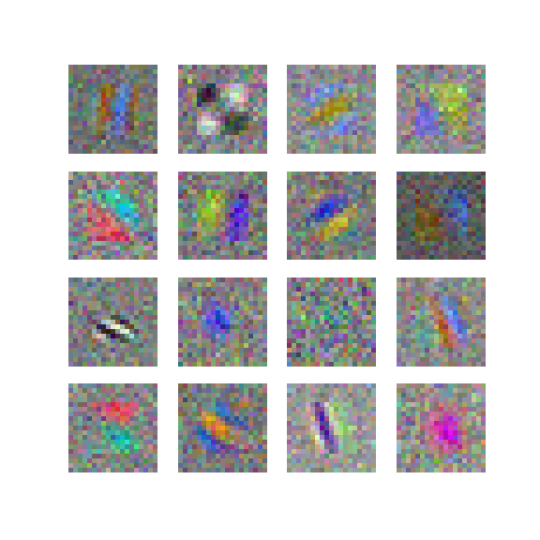
OpenNeuro: Generic Object Decoding
ImageNet–fMRI dataset from Horikawa and Kamitani (Nature Communications, 2017) on OpenNeuro
https://www.nara-wu.ac.jp/fuchuko/
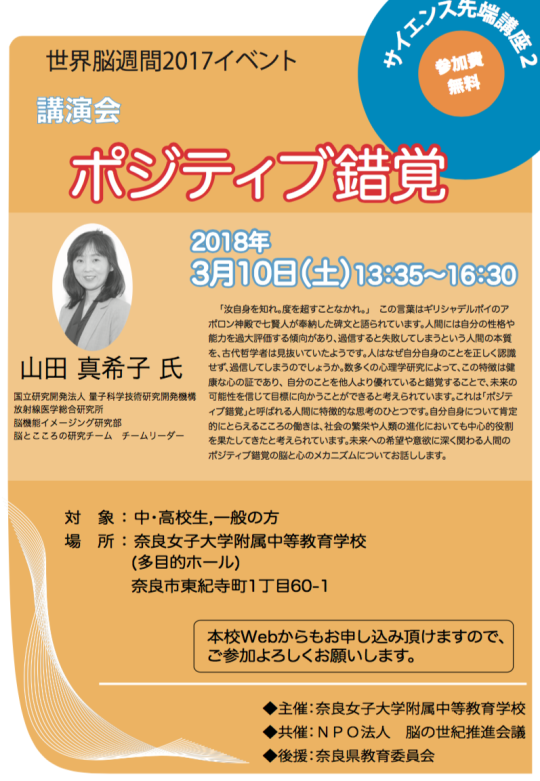
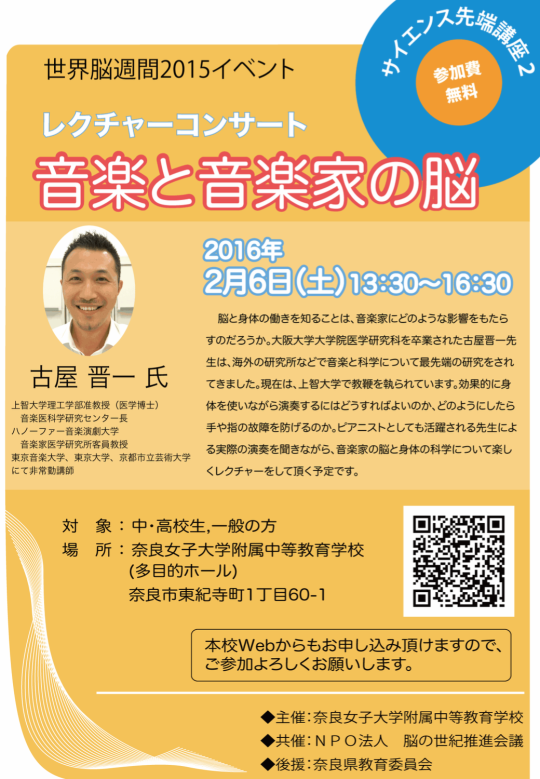
3月10日に、SSH先端講座・世界脳週間イベント講演会を行います。
演題:「ポジティブ錯覚」
講師:山田真希子氏 国立研究開発法人 量子科学技術研究開発機構
対象 : 中・高校生,一般の方
日時:2018年3月10日(土)13:35~16:30
場 所 : 奈良女子大学附属中等教育学校 (多目的ホール) 奈良市東紀寺町1丁目60-1
申し込み:https://www.nara-wu.ac.jp/fuchuko/
ポスター:https://www.nara-wu.ac.jp/fuchuko/15SSH/180310/17sentan.pdf
https://www.kyoto-u.ac.jp/ja/access/campus/yoshida/map6r_i.html
日時:2018年3月9日(金)16:30-18:00
場所:京都大学吉田キャンパス 医学部構内 先端科学研究棟1階 大セミナー室
https://www.kyoto-u.ac.jp/ja/access/campus/yoshida/map6r_i.html
参加費や登録は不要です。本講演会は、科学研究費補助金基盤研究(S)「心的イメージの神経基盤の解明」(研究代表者:神谷之康、JP15H05710) の助成を受けて行われます。
演題:「認知バイアスの脳内機構」
アブストラクト:TBA
https://www.kyoto-u.ac.jp/ja/access/campus/yoshida/map6r_i.html
日時:2018年3月30日(金)16:30-18:30
場所:京都大学吉田キャンパス 医学部構内 先端科学研究棟1階 大セミナー室
https://www.kyoto-u.ac.jp/ja/access/campus/yoshida/map6r_i.html
参加費や登録は不要です。 本講演会は、AMED 脳科学研究戦略推進プログラムの助成を受けて行われます。
Topographic principles of macroscale cortical connectivity
Daniel Margulies (CNRS UMR 7225, Institut du Cerveau et de la Moelle épinière (ICM))
Abstract: What determines the spatial arrangement of distinct areas of the cerebral cortex? Insights into functional processing streams indicate that areas are arranged stepwise, such that adjacent spatial position along the cortical mantle represents functional gradients. Having been largely restricted to describing processing within specific sensory modalities, how do these principles generalize across modalities and extend to the surrounding association cortex? I will present recent work describing various features of a principal gradient in cortical connectivity that spans between primary sensory/motor areas and higher-order transmodal association regions that in humans are known as the default-mode network. This arrangement suggests developmental mechanisms giving rise to the spatial distribution of cortical functions, and provides an anatomical scaffolding for investigating the propagation of information at both local and distributed spatial scales.
Searching for the elements of thought - exploring the role of the default mode network in human cognition
Jonathan Smallwood (University of York)
Abstract: Since it’s discovery at the turn of the century, the functions of the default mode network have become a major focus of research in human cognitive neuroscience. Although initially viewed as a task-negative system, recent work has suggested that this network may instead play an important functional role in cognition. In particular, it is possible that this large scale system reflects the process through which complementary yet distinct representations are brought together, a process that allows cognition to be guided by representations other than information in the immediate environment. The current talk will discuss recent evidence from our lab that are generally consistent with this integrative view of default mode network function.
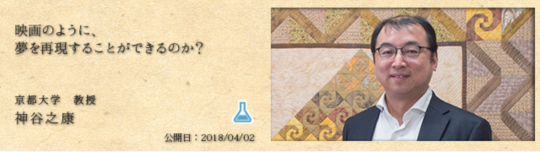
ワークショップ講師:
神谷 之康 京都大学 情報学研究科 教授
TA:村上 晃さん、白川 健さん(京都大学)
題名:脳情報のコーディングとデコーディング要旨:
計測技術の進歩により、行動中の神経活動を単一細胞から全脳までさまざまなレベルで取得することが可能になってきた。大量に得られるデータを解析・解釈する上で、計算神経科学で培われた神経モデリング手法の重要性が増している。中でも、脳活動を刺激や行動をコード化する符号とみなし、情報理論や信号処理の概念を用いてモデル化する方法は、脳と行動の関係を理解するための基礎研究だけでなく、予測や制御を目指す応用研究においても中心的な役割を果たしてきた。一方、近年ニューロンやシナプスの機能にヒントを得て作られた深層ニューラルネットワークが「人工知能」として研究され、応用分野において顕著な性能を示すとともに、生物の脳と相同性をもつことが議論されている。本ワークショップでは、神経エンコーディングとデコーディングの概念と手法を解説した後、学習済み深層ニューラルネットワークを脳と見立て「刺激−脳活動」データを取得する「実験」を行う。このデータを用いたエンコーディング・デコーディング解析を通して、人工知能モデルに親しみながら、脳データのモデリング・解析法の基礎を習得することを目指す。
2017
Sparse ordinal logistic regression (SOLR) - Matlab and Python library
c.f., Satake et al (bioRxiv, 2017)
https://www.kyoto-u.ac.jp/ja/access/campus/yoshida/map6r_i.html
2018年1月11日に、オランダ・ラドバウド大学のMarcel van Gerven教授をお迎えして講演会を開催します。van Gerven先生は、計算神経科学や人工知能の手法を脳画像解析に応用する研究を活発に進めている気鋭の研究者です。本講演では、深層ニューラルネットワークを活用したヒトの認知研究のアプローチについてお話いただきます。
日時:2018年1月11日(木)16:30-18:00 場所:京都大学吉田キャンパス 医学部構内 先端科学研究棟1階 大セミナー室 https://www.kyoto-u.ac.jp/ja/access/campus/yoshida/map6r_i.html 参加費や登録は不要です。 本講演会は、科学研究費補助金基盤研究(S)「心的イメージの神経基盤の解明」(研究代表者:神谷之康、JP15H05710) の助成を受けて行われます
Neural networks as a window on human cognition
Marcel van Gerven Donders Institute for Brain, Cognition and Behaviour Department of Artificial Intelligence, Radboud University
In past years, modern neural networks have led to major breakthroughs in various areas of research. In the Artificial Cognitive Systems lab we have embraced the use of neural networks to further our understanding of human cognition and endowing machines with cognitive abilities. In this talk, I will touch upon the different ways in which neural networks can be used as a tool in neuroscience to model neural information processing. Particularly, I will describe our use of neural networks to construct encoding models in various domains. Next, I will describe how adversarial training of neural networks can be used to generate state of the art reconstructions of internal representations from brain activity patterns. I will also touch upon our recent work which uses neural networks to restore function in the blind and create empathic robots that are able to recognize someone’s personality. I will conclude the presentation with a general discussion of how to model natural intelligence with neural networks.
(科学の扉)「想定外」を考える 死後も残る、個人の記憶 外部にデータ、過去の思考検索も:朝日新聞デジタル
2017.11.05(科学の扉)「想定外」を考える 死後も残る、個人の記憶 外部にデータ、過去の思考検索も | 朝日新聞
https://www.kyoto-u.ac.jp/ja/access/campus/yoshida/map6r_i.html
テキサス大学のTal Yarkoni博士をお招きして講演会を開催します。Yarkoni先生は、認知神経科学におけるデータ解析手法の開発者、また、オープンサイエンスの推進者として活躍されています。脳イメージング分野の文献テキストマイニングにより、心理概念と脳座標をデータ駆動的に関連付けるシステムNeurosynthは、ニューロインフォマティクスにおける標準ツールとして幅広く活用されています。本講演では、Neurosynthをはじめとする解析ツールや認知神経科学のオープンサイエンス化に向けた取り組みについて紹介していただきます。
日時:2017年7月28日(金)16:30-18:00 場所:京都大学吉田キャンパス 医学部構内 先端科学研究棟1階 大セミナー室 https://www.kyoto-u.ac.jp/ja/access/campus/yoshida/map6r_i.html 参加費や登録は不要です。
The coming informatics revolution in cognitive neuroimaging
Tal Yarkoni (University of Texas at Austin)
Abstract: Studying the brain using functional MRI is a complex and effort-intensive process. Conventionally, expert human input is required at virtually all stages of the workflow, ranging from experimental design to preprocessing to interpretation of results. In recent years, however, a vibrant neuroinformatics ecosystem has developed that promises to substantially reduce the effort burden on investigators by automating many of the typical processing and analysis steps. In this talk, I review a number of new tools, platforms, and standards–including Neurosynth the BIDS standard, the Nipype framework, and the Neurosynth, OpenNeuro, NeuroVault, and NeuroScout platforms–that collectively offer to dramatically improve the efficiency and scale of fMRI data analysis. I argue that widespread adoption of these tools will substantially reduce human effort and investigator bias, thereby freeing up researchers to focus their energies primarily on those aspects of the typical workflow that are best handled by humans–namely, hypothesis generation, experimental design, and model specification.
本講演会は、科学研究費補助金基盤研究(S)「心的イメージの神経基盤の解明」(研究代表者:神谷之康、JP15H05710) の助成を受けて行われます。

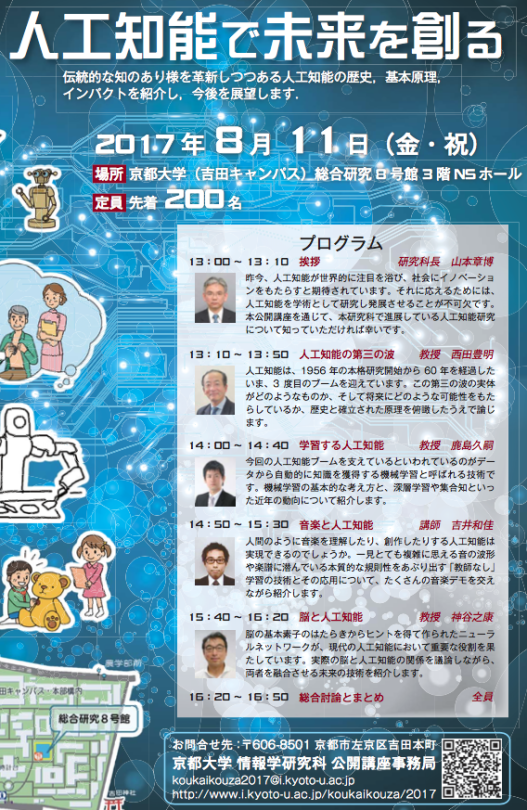
京都大学 大学院情報学研究科 知能情報学専攻 入試説明会: 2017年5月13日(土) 13:00〜18:00(15:30〜18:00 オープンラボ・個別相談会)
京都大学 大学院情報学研究科 知能情報学専攻の入試説明会およびオープンラボ(研究室見学)・個別相談会を開催致します。当専攻の受験を検討されている方は是非ご参加ください。
想定している主な参加対象者は、2017年8月に実施される入試(詳細は5月上旬ごろこちらに掲載予定)の受験を考えておられる、学内外の学部生、修士院生、社会人ですが、それ以外の方でも知能情報学専攻にご興味のある方の参加を歓迎します。具体的な研究の内容をご覧頂くとともに、各研究室の教員や院生と直接話す良い機会なので、是非ご参加ください。
●日時: 2017年5月13日(土) 13:00〜18:00(15:30〜18:00 オープンラボ・個別相談会)
●場所: 京都大学総合研究8号館 NSホール(アクセスなどの情報はこちら)
●内容: 全研究室の紹介とオープンラボ・個別相談会(自由見学)
2016
https://www.kyoto-u.ac.jp/ja/access/campus/yoshida/map6r_y/
2017年1月19日(木)に米国ドレクセル大学の西野 恒教授をお招きして、講演会を開催します。西野先生は、世界を舞台に活躍する気鋭のコンピュータビジョン研究者です。本講演では、素材や質感に関する最近の研究成果についてご発表いただきます。機械学習や神経科学、心理学とも関連するテーマですので、異分野の方もぜひご参加ください。
日時:2017年1月19日(木)10:30-12:00 場所:京都大学吉田キャンパス 総合研究8号館 3階Nホール https://www.kyoto-u.ac.jp/ja/access/campus/yoshida/map6r_y/ 参加費や登録は不要です。
素材から紡ぐ視覚世界 ドレクセル大学 コンピュータサイエンス科 教授 専攻長 西野 恒(Ko Nishino)
物が何からできているか、その素材に関する情報は視覚情報を読む解く上で貴重な手がかりとなります。例えば、ロボットが目の前にぬかるみや凍った地面があることを見て取れたなら、足を取られないよう、あらかじめ動きを正しく制御することができます。素材情報の抽出をいかにおこなうかは、人間の視覚野の働きを解明するための根源的な問題でもあります。本講演では、計算機に素材を識別する能力をそなえるための研究を中心に、我々の研究室でおこなっているコンピュータビジョンの研究を紹介いたします。特に、生成的手法として新たな反射モデルを用いて画像から素材固有の反射特性とともに光源状況と幾何形状をベイズ推定する研究、さらには、識別問題として素材属性にもとづいてピクセルごとに素材を同定する研究を紹介します。特に後者においては、人間の知覚と同様に、素材属性が深層学習をもちいた素材認識の過程で浮かび上がり、物体や場所の推定結果と組み合わせることによってより精度の高い認識につながることを示します。さらに、神経科学と認知科学における並列研究との関連から、コンピュータによる素材知覚の研究がいかに我々の視覚世界を紐解く手がかりを与えるか示します。
URL: https://www.cs.drexel.edu/~kon/
本講演会は、科学研究費補助金基盤研究(S)「心的イメージの神経基盤の解明」(研究代表者:神谷之康、JP15H05710) の助成を受けて行われます。
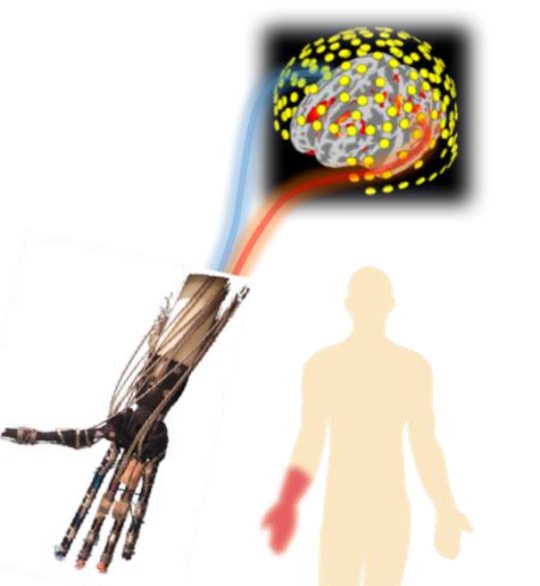
京都大学 大学院情報学研究科 知能情報学専攻 オープンラボ (11/21(月)13:00-16:00)
京都大学 大学院情報学研究科 知能情報学専攻では、以下の要領でオープンラボ(研究室公開)を開催いたします。
当専攻は、生体、とりわけ人間の情報処理機構を解明し、これを高次情報処理の分野に展開することを目的とした学際的な専攻です。具体的には、生体の知的な活動の根源としての生命、脳・神経、認知、行動などの人間や生体の原理、画像、音声、言語といった情報メディア、さらには人間とメディアのインタラクション、人工知能や機械学習、ビッグデータ、ソフトウエアやネットワークといった人間と情報処理の関わるさまざまな側面に関して教育・研究を行っています。
本専攻教員との共同研究を考えておられる企業の方、社会人博士の受験を考えておられる方、もしくは本専攻にご興味のある方のご参加を歓迎します。具体的な研究の内容をご覧いただくとともに、各研究室の教員や院生と話す良い機会ですので、是非ご参加ください。
● 日時・場所 日時:2016年11月21日(月) 13時-16時 場所:京都大学 吉田キャンパスおよび宇治キャンパス
詳細は次のURLをご覧ください。 https://www.ist.i.kyoto-u.ac.jp/whatsNew/2016/32.html
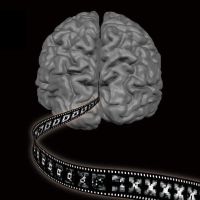

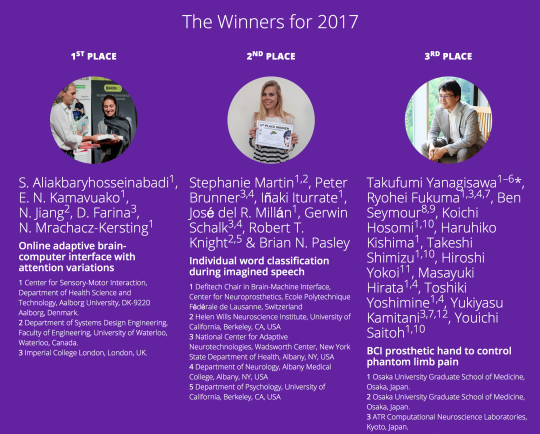
Brain-Machine Tech Helps Relieve Mysterious ‘Phantom Limb Pain’
Researchers used robotic prosthetics to help relieve phantom limb pain in a new study in the journal Nature Communications.

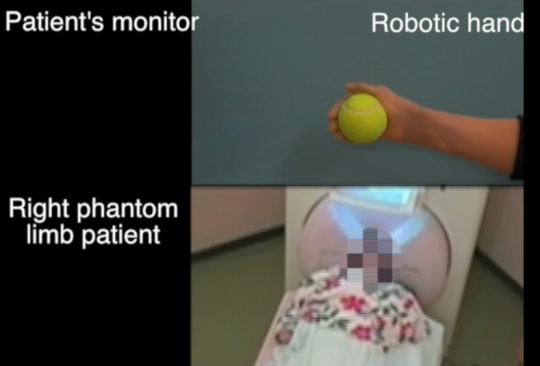
https://archive.org/details/Redwood_Center_2014_04_30_Masataka_Watanabe
日時:平成28年10月4日(火)16:00-17:30 場所:医学部構内・先端科学研究棟 1階大セミナー室
第一視覚野は視覚的意識を担うか(おまけ:人工意識のチューリングテストと分離脳再配線マウスを用いたその妥当性の検証)
渡辺正峰 東京大学大学院工学系研究科 准教授 Max Planck Institute for Biological Cybernetics (独) 客員研究員
第一視覚野には意識に上らない情報が数多く存在することが知られていますが、それが全体として意識とどのような関わりを持つかについては多くの議論があります。本研究発表では、両眼視野闘争下のヒトfMRI[1]とマウスの視覚バックワードマスキング・オプトジェネティックスV1抑制[2]の二つの実験群から、それが意識を担わない可能性について議論します。また、時間がゆるすようであれば、 意識のハード・プロブレムへと少しでも近づくべく思考実験および研究計画として提案している「人工意識のチューリングテスト」[3]を材料に、議論を深められれば幸いです。
[1] Masataka Watanabe, Kang Cheng, Yusuke Murayama, Kenichi Ueno,Takeshi Asamizuya,Keiji Tanaka, Nikos Logothetis, “Attention but not awareness modulates the BOLD signal in the human V1 during binocular suppression”. Science, 2011. 334(6057): p. 829-31. [2] Masataka Watanabe, Suzunosuke Nagaoka, Lisa Kirchberger, Enes Poyraz, Sindy Lowe, Betul Uysal, Agne Vaiceliunaite, Nelson Totah, Nikos Logothetis, Laura Busse, Steffen Katzner, Transient activity in mouse V1 is sufficient for visual discrimination, (in preparation) [3] Masataka Watanabe, “Turing Test for Machine Consciousness and the Chaotic Spatiotemporal Fluctuation Hypothesis”, Toward a Science of Consciousness 2014 https://archive.org/details/Redwood_Center_2014_04_30_Masataka_Watanabe
(本講演会は、科学研究費補助金基盤研究(S)「心的イメージの神経基盤の解明」[研究代表者:神谷之康、JP15H05710] の助成を受けて行われます)
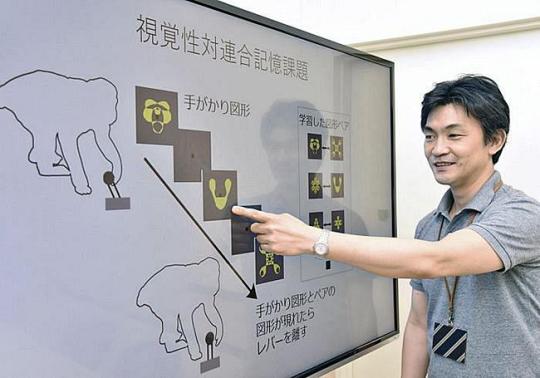
Associative-memory representations emerge as shared spatial patterns of theta activity spanning the primate temporal cortex. Nakahara K, Adachi K, Kawasaki K, Matsuo T, Sawahata H, Majima K, Takeda M, Sugiyama S, Nakata R, Iijima A, Tanigawa H, Suzuki T, Kamitani Y, Hasegawa I. Nat Commun. 2016 Jun 10;7:11827. doi: 10.1038/ncomms11827.
“気分の波”に同期して脳で時計遺伝子の発現量が周期的に変動することを発見— 双極性障害(躁うつ病)の脳内メカニズムの解明に前進 — | Topics | 藤田保健衛生大学 総合医科学研究所
Hideo Hagihara, Tomoyasu Horikawa, Hironori K. Nakamura, Juzoh Umemori, Hirotaka Shoji, Yukiyasu Kamitani, Tsuyoshi Miyakawa. Circadian Gene Circuitry Predicts Hyperactive Behavior in a Mood Disorder Mouse Model. Cell Reports 14(12): 2784-2796, 2016.
2015
2014
2013
2012
2010
2009
Brain scanner can tell a Dali from a Picasso
The brain seems to have a code for different artistic styles, which could one day be used to classify art
CM制作から犯罪予防薬の開発、夢の映像化も可能に!? 「脳科学」が未来を変える?
脳波でCMの善し悪しを決める、受刑者の脳を調べ犯罪予防薬を開発する、etc・・・。脳科学はいま、あらゆる分野で活用され始めた。脳トレブームを超え、脳科学の進歩は遠くない未来の社会に大きな影響を与える可能性を秘めている。
NHK「追跡!AtoZ」取材班

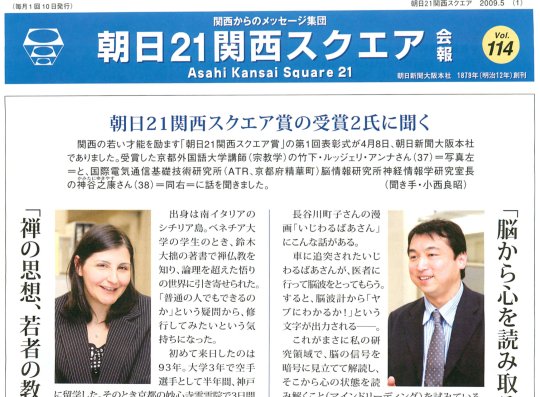
2008
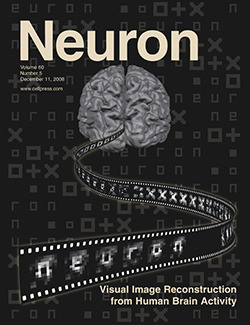
Visual images reconstructed from brain activity
Recent advances in functional neuroimaging have enabled researchers to predict perceptual experiences with a high degree of accuracy. For example, it is possible to determine whether a subject is looking at a face or some other category of visual stimulus, such as a house. This is possible because we know that specific regions of the…
Japanese Group Reconstructs Visual Images from Brain Activity Patterns
A Japanese research group developed the “visual image reconstruction” technology to recon…
‘Mind-reading’ software could record your dreams
Mental pictures can now be extracted from your brain using nothing but software and fMRI scans – should we start worrying about ‘neural marketing’?
2006
Thinking of Child’s Play Tim Hornyak Abstract Brain-Machine Interface Turns Robots Into Gamers
Scientific American 295, 30 (2006) doi:10.1038/scientificamerican0906-30
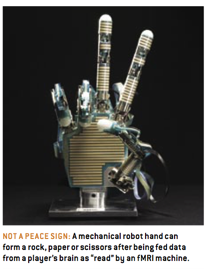
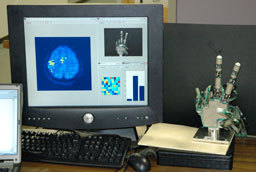
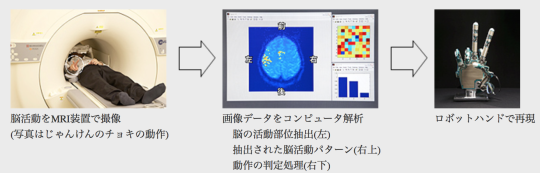
“脳で操る”新しいインタフェース、MRIの解読結果をコマンドに
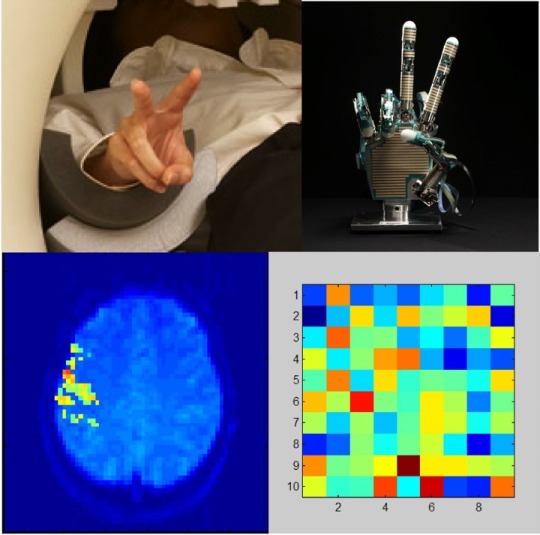
「グー」「チョキ」「パー」。MRI(磁気共鳴画像装置)の中に横たわった被験者が右手でジャンケンの動作を繰り返す。それに応じて,ロボットハンドがグー/チョキ/パーと,被験者の動作を再現する(図)。
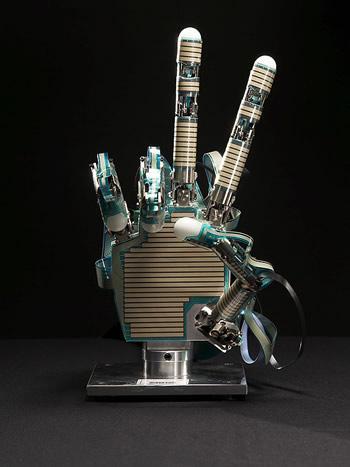
Robot hand controlled by thought alone
The robotic hand mimics a real one and is controlled based on real-time imaging of the user’s brain activity
2005
Mind-reading machine knows what you see
What someone sees can be detected by remotely measuring their brain activity – it may lead to breakthroughs in measuring consciousness
Improved Scanning Technique Uses Brain as Portal to Thought
By NICHOLAS WADEAPRIL 25, 2005
Scientists use magnetic imaging to see what the brain saw